Find a Forum
Find a Forum

Find a Forum
Leadership Insights
Are We Too Precious About Advice?
I just dropped my freshman daughter off at college. The urge to give advice was overwhelming. Last chance to parent! Surely there were a few things I could tell her that might save her from some of the mistakes I had made.
At the same time, I learned a new word this summer to describe where she was coming from: individuation. It’s the healthy process of separating from your family and becoming your own person. Fingers were in ears, eyes were rolling. “I got this, thanks, bye!” The two opposite forces collided in a fairly predictable emotional car crash.
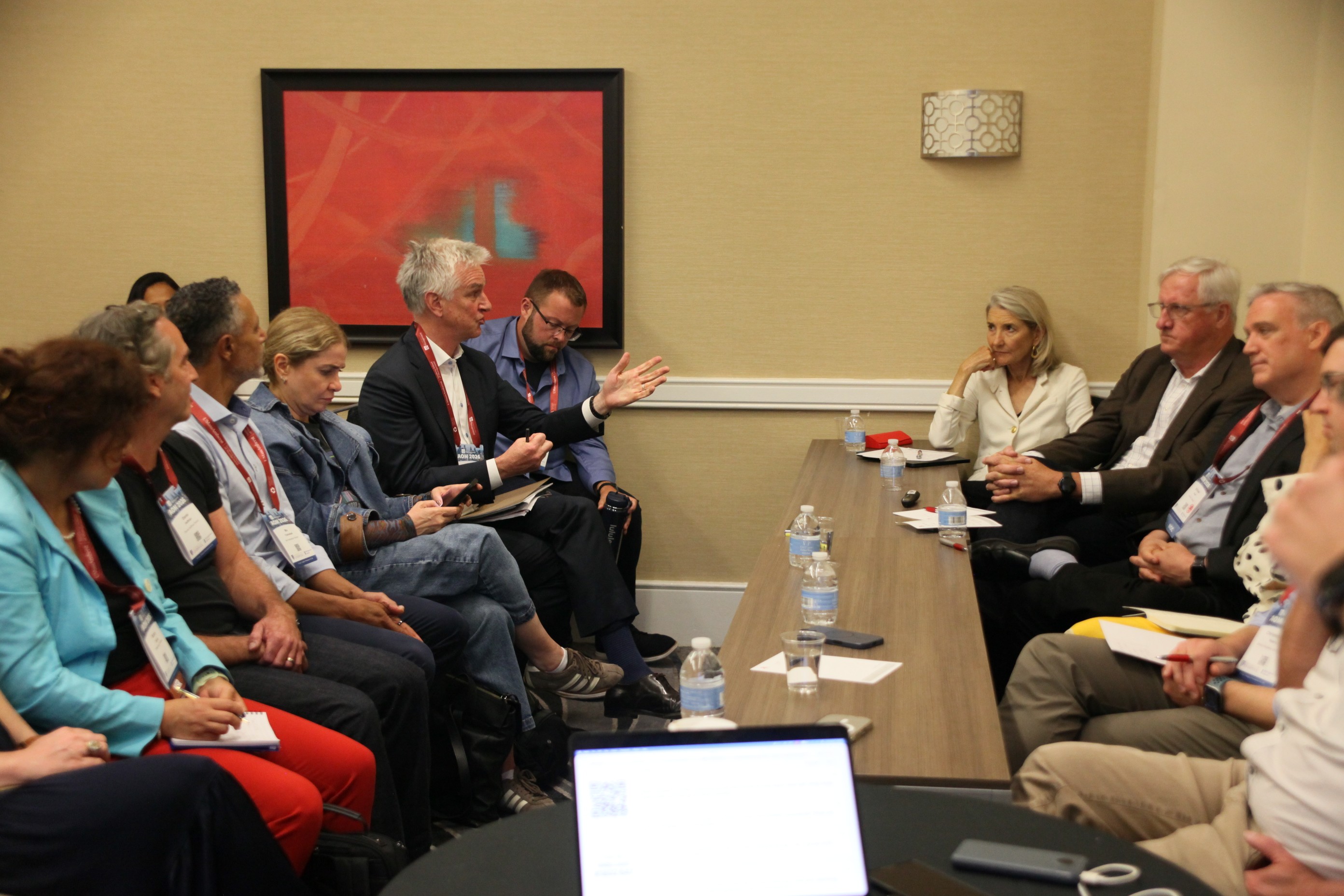
Only a few weeks later, I found myself at the Academy of Management symposium on “Peer Coaching Groups,” listening to a room full of people debate another version of the same problem: what do we do with advice? Anyone who knows Forum knows this conversation. Advice is one of those subjects that can become almost theological. Different traditions have developed different answers, and most of them have good reasons for believing they have the right one.
The YPO and EO people in the room were well represented, and they brought a fairly firm “no advice” tradition with them. There is good thinking behind that rule. We’ve even made a short film at ForumSpace to help explain why the norm exists.
I just dropped my freshman daughter off at college. The urge to give advice was overwhelming. Last chance to parent! Surely there were a few things I could tell her that might save her from some of the mistakes I had made.
At the same time, I learned a new word this summer to describe where she was coming from: individuation. It’s the healthy process of separating from your family and becoming your own person. Fingers were in ears, eyes were rolling. “I got this, thanks, bye!” The two opposite forces collided in a fairly predictable emotional car crash.
Only a few weeks later, I found myself at the Academy of Management symposium on “Peer Coaching Groups,” listening to a room full of people debate another version of the same problem: what do we do with advice? Anyone who knows Forum knows this conversation. Advice is one of those subjects that can become almost theological. Different traditions have developed different answers, and most of them have good reasons for believing they have the right one.
The YPO and EO people in the room were well represented, and they brought a fairly firm “no advice” tradition with them. There is good thinking behind that rule. We’ve even made a short film at ForumSpace to help explain why the norm exists.
The Problem With Advice Isn't Just Receiving It
The problem with traditional advice is not simply that people don't like receiving it, although, as my daughter would confirm, that is certainly part of it. The deeper problem is the presumption behind it. When I tell you what you should do, I am assuming that I understand your situation well enough to know what is best for you. Usually, I am drawing on my own experience, which may or may not have much to do with yours.
There is also a more subtle issue. In giving advice, we often do the intellectual work for someone else. We take a complicated experience, process it ourselves and hand over the conclusion: here's what I learned; here's what you should do.
The Problem With Advice Isn't Just Receiving It
The problem with traditional advice is not simply that people don't like receiving it, although, as my daughter would confirm, that is certainly part of it. The deeper problem is the presumption behind it. When I tell you what you should do, I am assuming that I understand your situation well enough to know what is best for you. Usually, I am drawing on my own experience, which may or may not have much to do with yours.
There is also a more subtle issue. In giving advice, we often do the intellectual work for someone else. We take a complicated experience, process it ourselves and hand over the conclusion: here's what I learned; here's what you should do.
Let People Do Their Own Thinking
One of the things peer groups can offer is the chance to do that processing yourself.
You hear someone describe what happened to them. You hear the details, not just the conclusion. You notice what they noticed. You may draw a completely different lesson from their experience than they did. Sometimes the most useful part of someone else's story isn't even the lesson they intended to share.
That is one of the reasons lived experience can be so powerful in a peer group. The value isn't always in being told what to think about someone else's experience. Sometimes it is in being allowed to encounter it and see what it makes you think about your own.
Michael Bungay Stanier has a line I have always liked: “Advice is the junk food of helping.” It is a pretty good summary of one side of the argument. But sometimes, that is exactly what people want.
Let People Do Their Own Thinking
One of the things peer groups can offer is the chance to do that processing yourself.
You hear someone describe what happened to them. You hear the details, not just the conclusion. You notice what they noticed. You may draw a completely different lesson from their experience than they did. Sometimes the most useful part of someone else's story isn't even the lesson they intended to share.
That is one of the reasons lived experience can be so powerful in a peer group. The value isn't always in being told what to think about someone else's experience. Sometimes it is in being allowed to encounter it and see what it makes you think about your own.
Michael Bungay Stanier has a line I have always liked: “Advice is the junk food of helping.” It is a pretty good summary of one side of the argument. But sometimes, that is exactly what people want.
But Sometimes People Actually Want Advice
The Vistage practitioners at the symposium had a different tradition around this. Peter Campbell, one of Vistage's former PE owners, and Mike Richardson, a long-time chair and now a principal at Renaissance Executive Forums, talked about the value of those “what would you do if you were me?” moments. In some groups, they actually go around the room and ask everyone that question.
So there was a genuine contrast in the room: one tradition built around a strong norm against advice, and another much more comfortable bringing direct recommendations into the conversation.
Then Amy Edmondson raised her hand.
But Sometimes People Actually Want Advice
The Vistage practitioners at the symposium had a different tradition around this. Peter Campbell, one of Vistage's former PE owners, and Mike Richardson, a long-time chair and now a principal at Renaissance Executive Forums, talked about the value of those “what would you do if you were me?” moments. In some groups, they actually go around the room and ask everyone that question.
So there was a genuine contrast in the room: one tradition built around a strong norm against advice, and another much more comfortable bringing direct recommendations into the conversation.
Then Amy Edmondson raised her hand.
Is “Advice” Too Blunt a Category?
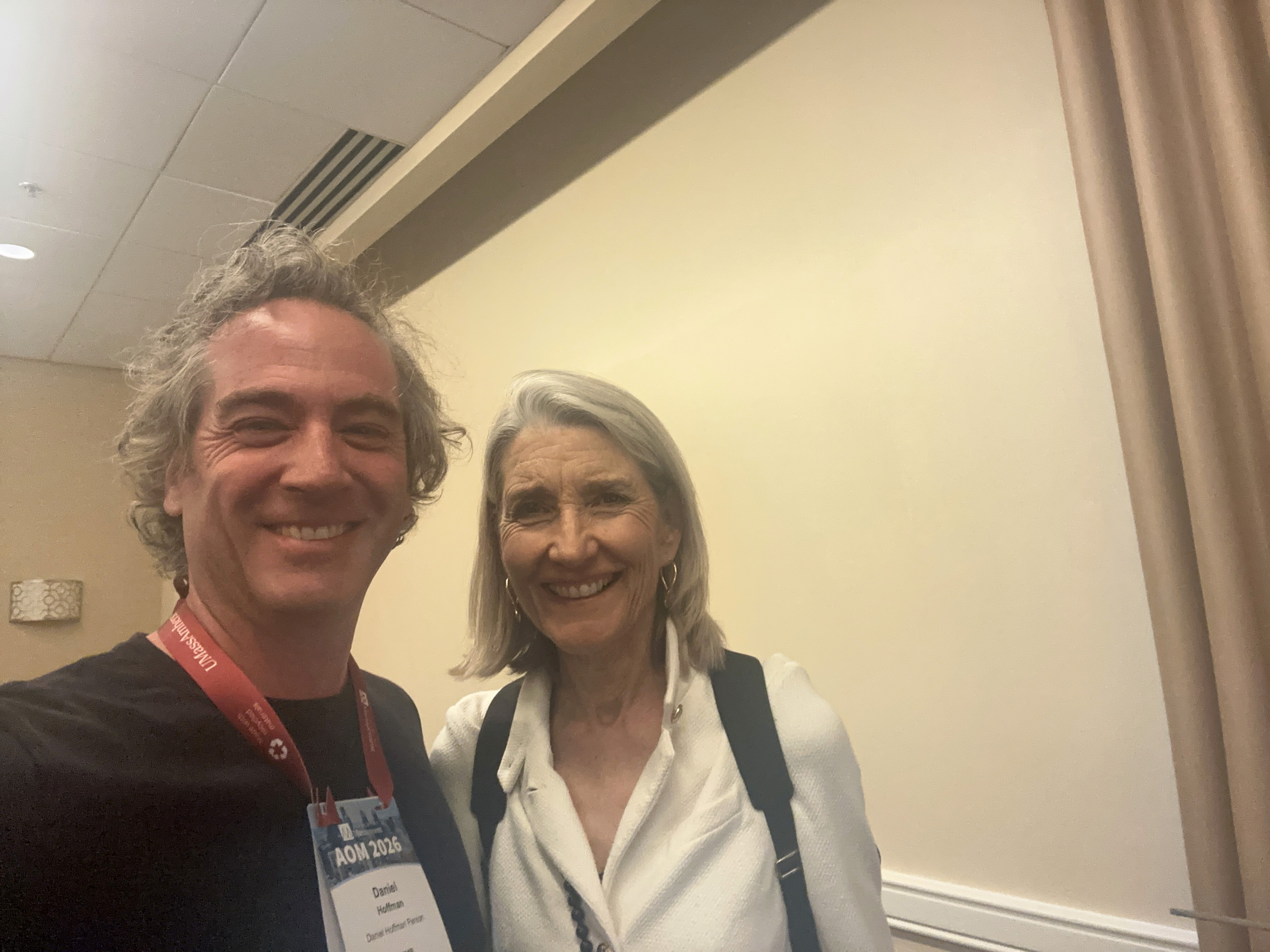
I was delighted to see Amy there. She has spent much of her career helping us understand how people learn, work and speak honestly with one another in groups, and she has a wonderful ability to take a complicated discussion and ask the question that suddenly makes everyone look at it differently.
Her question was essentially: isn't this a false dichotomy? That was one of my favourite moments of the symposium. Because once she said it, the debate started to look different.
Maybe “advice” is simply too blunt a category. There is, after all, quite a distance between, “You should fire him,” and, “I've seen something like this before. I wonder if it would be helpful to tell you what happened.”
There is a difference between handing someone your conclusion and giving them access to the experience that led to it. There is a difference between, “Here's what you need to do,” and, “Here is a possibility. What do you think?”
And, there is a difference between offering a generic solution because you recognise the shape of someone's problem and offering something because you have spent enough time with that person to have a deep understanding of how they are wired, what matters to them and what they are actually wrestling with.
Is “Advice” Too Blunt a Category?
I was delighted to see Amy there. She has spent much of her career helping us understand how people learn, work and speak honestly with one another in groups, and she has a wonderful ability to take a complicated discussion and ask the question that suddenly makes everyone look at it differently.
Her question was essentially: isn't this a false dichotomy? That was one of my favourite moments of the symposium. Because once she said it, the debate started to look different.
Maybe “advice” is simply too blunt a category. There is, after all, quite a distance between, “You should fire him,” and, “I've seen something like this before. I wonder if it would be helpful to tell you what happened.”
There is a difference between handing someone your conclusion and giving them access to the experience that led to it. There is a difference between, “Here's what you need to do,” and, “Here is a possibility. What do you think?”
And, there is a difference between offering a generic solution because you recognise the shape of someone's problem and offering something because you have spent enough time with that person to have a deep understanding of how they are wired, what matters to them and what they are actually wrestling with.
There's a Spectrum Between Advice and No Advice
Those things may all get labelled “advice,” but they are not really the same thing. What seemed to emerge from the conversation was less a choice between advice and no advice, and more of a spectrum in how peers share what they know.
At one end, you have prescriptive advice: this is what you should do. At the other, perhaps, you have the raw sharing of experience: this happened to me; this is how I saw it; this is what I did. And in between are all sorts of ways of bringing your experience into the room without assuming that your conclusion is the right answer for someone else.
The language matters. “I wonder if this would be helpful.” “Here's something I've seen before.” “If it helps, this is what I might consider.” “Here's a possibility, what do you think?”
None of these removes the responsibility for the decision from the person who has to make it. And that seems important. A difficult decision remains difficult even when you have a room full of smart people around you. In fact, perhaps one of the things a good peer group should resist is the temptation to make that burden disappear.
There's a Spectrum Between Advice and No Advice
Those things may all get labelled “advice,” but they are not really the same thing. What seemed to emerge from the conversation was less a choice between advice and no advice, and more of a spectrum in how peers share what they know.
At one end, you have prescriptive advice: this is what you should do. At the other, perhaps, you have the raw sharing of experience: this happened to me; this is how I saw it; this is what I did. And in between are all sorts of ways of bringing your experience into the room without assuming that your conclusion is the right answer for someone else.
The language matters. “I wonder if this would be helpful.” “Here's something I've seen before.” “If it helps, this is what I might consider.” “Here's a possibility, what do you think?”
None of these removes the responsibility for the decision from the person who has to make it. And that seems important. A difficult decision remains difficult even when you have a room full of smart people around you. In fact, perhaps one of the things a good peer group should resist is the temptation to make that burden disappear.
Keep the Decision With the Person Who Owns It
Your peers can bring experience, analysis and support, but they cannot take responsibility for a decision whose consequences belong to you.
Adam Grant has an interesting perspective on this in Hidden Potential. One of his arguments is that peers help us improve because they act as mirrors, helping us see things about ourselves that are difficult to see alone. In a conversation with Rufus Griscom on The Next Big Idea Podcast, Grant also makes the case that advice can be useful precisely because it looks forward. Feedback tends to focus on what happened; advice can open up possibilities about what might happen next. He also talks about the “coaching effect”: the idea that the person helping someone else think through a problem is learning too. In trying to make sense of someone else's situation, you process your own experience. You may discover something about the problem, or about yourself, that you hadn't seen before.
That, too, seemed relevant to the conversation in the room.
Keep the Decision With the Person Who Owns It
Your peers can bring experience, analysis and support, but they cannot take responsibility for a decision whose consequences belong to you.
Adam Grant has an interesting perspective on this in Hidden Potential. One of his arguments is that peers help us improve because they act as mirrors, helping us see things about ourselves that are difficult to see alone. In a conversation with Rufus Griscom on The Next Big Idea Podcast, Grant also makes the case that advice can be useful precisely because it looks forward. Feedback tends to focus on what happened; advice can open up possibilities about what might happen next. He also talks about the “coaching effect”: the idea that the person helping someone else think through a problem is learning too. In trying to make sense of someone else's situation, you process your own experience. You may discover something about the problem, or about yourself, that you hadn't seen before.
That, too, seemed relevant to the conversation in the room.
Maybe the Rule Matters Less Than What It Protects
Perhaps the value isn't determined simply by whether someone has crossed an imaginary line called “advice.” Perhaps it depends more on whether the exchange still preserves the things that make peer learning valuable in the first place: experience, analysis and support.
There is something very appealing about a fixed rule, especially when you are teaching people how to participate in a new kind of group. “No advice” is clear. It is memorable. It gives people something concrete to practise, particularly when their natural instinct is to jump in and solve the problem.
But like most useful rules, it can become a little less neat when real people start talking to one another.
That was Amy's point, or at least the point I took away from watching her cut through the debate. The interesting question may not be which side is right. It may be whether we have framed the choice too narrowly in the first place.
I left the symposium thinking less about the rule and more about the range of ways people can share experience with one another.
Maybe the Rule Matters Less Than What It Protects
Perhaps the value isn't determined simply by whether someone has crossed an imaginary line called “advice.” Perhaps it depends more on whether the exchange still preserves the things that make peer learning valuable in the first place: experience, analysis and support.
There is something very appealing about a fixed rule, especially when you are teaching people how to participate in a new kind of group. “No advice” is clear. It is memorable. It gives people something concrete to practise, particularly when their natural instinct is to jump in and solve the problem.
But like most useful rules, it can become a little less neat when real people start talking to one another.
That was Amy's point, or at least the point I took away from watching her cut through the debate. The interesting question may not be which side is right. It may be whether we have framed the choice too narrowly in the first place.
I left the symposium thinking less about the rule and more about the range of ways people can share experience with one another.
I'm Still Figuring Out the Difference
Perhaps inevitably, I thought again about my daughter.
She is in the business of becoming her own person now, which apparently means my lifetime supply of wisdom is not always required. Fair enough. But there is a difference between forcing your answer on someone and being willing to share what you have learned when the moment is right.
I'm still figuring out the difference.
Fortunately, I suspect I'll get plenty of opportunities to practise.
About the Author:
Dan Hoffman is the CEO of ForumSpace. He believes organizations grow as fast as their people grow. He believes people, like plants, tend to grow toward the light. He's less interested in inventing something new than he is in helping an old, human practice make a resurgence in modern life. Through ForumSpace and CircleSpace, he is able to work on scaling beautiful, transformative small group experiences and live the Warhol quote, “Good business is the best art.”
I'm Still Figuring Out the Difference
Perhaps inevitably, I thought again about my daughter.
She is in the business of becoming her own person now, which apparently means my lifetime supply of wisdom is not always required. Fair enough. But there is a difference between forcing your answer on someone and being willing to share what you have learned when the moment is right.
I'm still figuring out the difference.
Fortunately, I suspect I'll get plenty of opportunities to practise.
About the Author:
Dan Hoffman is the CEO of ForumSpace. He believes organizations grow as fast as their people grow. He believes people, like plants, tend to grow toward the light. He's less interested in inventing something new than he is in helping an old, human practice make a resurgence in modern life. Through ForumSpace and CircleSpace, he is able to work on scaling beautiful, transformative small group experiences and live the Warhol quote, “Good business is the best art.”