7 Best Mastermind Groups for Leaders in 2026

Right now, you’re likely staring down a crossroads. You want to join a mastermind group, but you’re trying to figure out if a casual, informal gathering of peers will actually cut it, or if your role demands something far more structured.
If you’re looking for a facilitated, professionally guided experience rather than a DIY peer circle you have to manage yourself, ForumSpace is the strongest overall pick. At the same time, organizations like EO, Vistage, TIGER 21, The Alternative Board, Renaissance Executive Forums, and Genius Network each target a very specific stage and leadership style.
ForumSpace serves as a natural starting point for this decision. It runs its own facilitated Forums while also operating Forum Finder, an independent directory of around 80 real forums.
But if the program isn’t the exact fit for your team, you still have an honest place to browse next.
As we walk through the options, we’ll look at what each program costs where pricing is public, who each network is genuinely built for, and where each model falls short.
First, let's review the options in the comparison table below.
Rank | Name | Best For | Price |
1 | ForumSpace | Leaders wanting a confidential, professionally facilitated Forum with a structured methodology | Custom |
2 | EO (Entrepreneurs' Organization) | Founders past $1M in revenue wanting a large global peer forum network built into membership | Initiation: $3,500 Annual Dues: $2,630+ (Plus local chapter dues) |
3 | Vistage | Established CEOs wanting a chair-led monthly peer group plus one-on-one executive coaching | ~$15,000–$25,000/year (Or ~$1,380/mo + $2,500 init. fee, varies by market) |
4 | TIGER 21 | Ultra-high-net-worth investors and exited founders focused on wealth preservation and portfolio decisions | Initiation: $5,000 Annual Dues: $34,000 |
5 | The Alternative Board (TAB) | Small and mid-sized business owners wanting a peer advisory board plus one-on-one coaching at a lower cost | Not published publicly (Set locally by regional franchisees) |
6 | Renaissance Executive Forums (REF) | C-suite executives from non-competing industries wanting a structured advisory board format | Not published publicly (Disclosed privately during placement) |
7 | Genius Network | Marketing-driven entrepreneurs and agency or info-product founders wanting high-ticket connections and live events | Standard (25K Group): $25,000/year Upper-tier (GeniusX): Up to $100,000/year |
What Is a Mastermind Group?

People throw the phrase around constantly in boardrooms and Slack channels. But before looking at the top options on the market, let’s ground ourselves in what a mastermind group actually represents.
Where the Concept Comes From
Napoleon Hill stamped the term into modern business lore via “Think and Grow Rich”. He framed it around a simple premise: a small group combining knowledge and mutual support to chase a shared target.
Decades later, the term outgrew its origins. And today, the label covers almost any recurring peer arrangement. It stretches all the way from casual online hangouts to elite corporate memberships carrying five-figure price tags.
What a Mastermind Group Looks Like in Practice Today
Modern groups usually look like a small circle meeting on a regular cadence to unpack live operational problems, vet tough decisions, and hold each other accountable. Most operate without a formal facilitator or rigorous screening protocols.
Additionally, they’re typically run by members or guided loosely by a single coach. They usually meet monthly, but quality swings wildly from one room to the next.
Consistency, accountability, and confidentiality depend entirely on whoever manages to show up on a given Tuesday.
This exact variability explains why figuring out how to find a mastermind group takes real legwork. Because there’s no central directory or uniform standard, leaving leaders to navigate the search completely blind.
Mastermind Group vs a ForumSpace Forum: What Is the Difference

Let’s get one thing out of the way: A standard mastermind group and a ForumSpace Forum share overlapping DNA, but they run on entirely different operating systems.
To see how they diverge, look at the mechanics side by side:
How They Start:
A traditional group usually comes together informally. Someone gathers a few peers, and the group relies entirely on whoever started it to keep things moving. A Forum starts through intentional design, bringing vetted peers together based on careful composition.
How They Operate:
Typical meetups run loosely with minimal guidance, and sessions depend on the mood of the room. On the other hand, a Forum follows a defined methodology anchored by a trained facilitator who guides every single minute.
How Confidentiality Works:
Informal groups offer variable trust levels based on personal relationships, whereas Forums operate under strict, structured protocols that protect sensitive business conversations.
Now, opting for a lighter, cheaper, DIY format is a completely valid choice for leaders who want casual connections. After all, informal meetups serve a distinct purpose.
But when you look past the labels, the real value of ForumSpace comes down to consistency and depth of facilitation. Yes, informal peer groups hold plenty of value, but structured formats protect your schedule and produce actual depth rather than letting conversations drift.
The 7 Best Mastermind Groups for Leaders in 2026
The options below cover everything from elite global networks to specialized peer boards, laid out with what each costs, who each is built for, and where each model falls short.
1. ForumSpace

Quick Verdict
For leaders looking to move past the DIY setup of a traditional mastermind group, ForumSpace shifts the focus entirely toward professional facilitation.
This platform acts as the home of the Forum. Rather than pushing a self-serve software product, ForumSpace enables and delivers a structured leadership experience. Here, every group operates on trained facilitators, a proven Forum methodology, custom technology, onboarding education, and ongoing resources.
What Makes It Different
Facilitation and Vetted Composition: Every single session runs under the guidance of a trained facilitator using a structured, repeatable methodology. Peer composition relies on careful vetting rather than open sign-ups.
The Sponsor and Forum Mate Model: Membership follows a relationship-based path rather than a self-checkout cart. A Sponsor, typically a founder, CEO, or senior leader, nominates a Forum Mate from their executive team to participate.
The Forum Finder Directory: ForumSpace also operates Forum Finder, a directory listing around 80 real forums. If ForumSpace’s specific program doesn’t match your exact requirements right away, an open directory listing around 80 real forums, giving you a transparent place to browse other options.
Ready to explore how structured peer groups change executive decision-making? Get started with ForumSpace today.
2. EO (Entrepreneurs' Organization)

When scaling past typical startup hurdles, founders often scan the landscape for top-tier mastermind groups for entrepreneurs. And Entrepreneurs’ Organization (EO) holds a prominent spot in that category.
Entry requires clear operational standing. You must own, found, or hold majority stakeholder status in an enterprise generating at least 1,000,000 USD in revenue over the most recent fiscal year. Venture-backed companies navigate a separate, adjusted entry bar.
Acceptance relies on an invitation vetted directly through a local chapter.
Internal groups form a mandatory part of the membership framework here. Furthermore, new participants complete formal onboarding before getting assigned to a small, ongoing peer circle.
Pricing: Annual global dues sit around US$2,630, paired with a US$3,500 one-time global initiation fee. Local chapters add separate regional dues that vary by location.
Best For: Founders who’ve crossed seven figures in revenue and want a large international peer network built strictly around business ownership rather than general corporate management.
3. Vistage
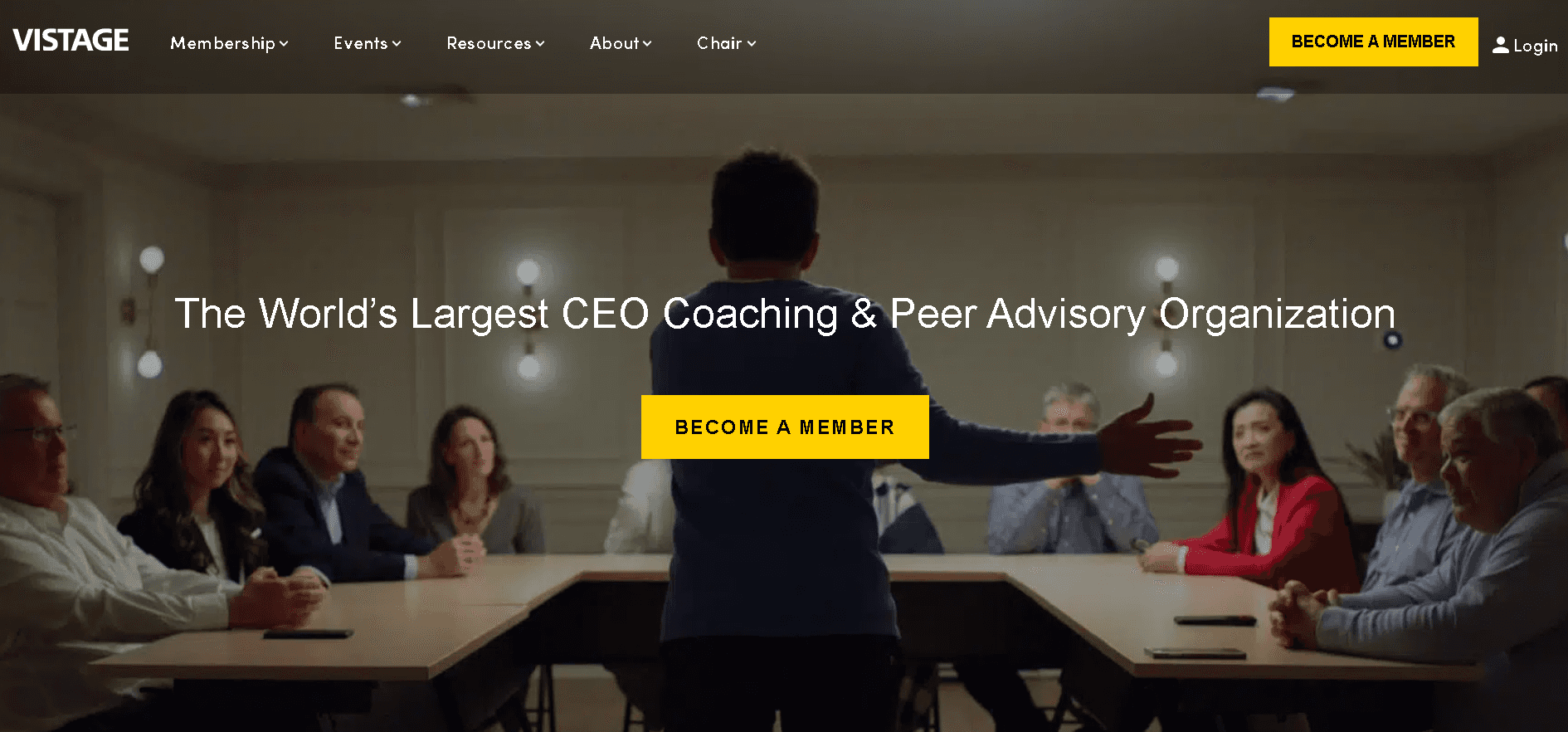
Moving away from broad entrepreneur networks, Vistage shifts focus toward mid-market operations. Each cohort gathers 12 to 16 peers for a full monthly day of discussion, backed by regular one-on-one coaching sessions led directly by the chapter chair.
Target buyers are established corporate leaders rather than early-stage startup operators.
Pricing: Annual memberships generally fall between $15,000 and $25,000 (roughly $1,380 per month in CEO dues plus a $2,500 one-time initiation fee), billed on a monthly schedule alongside initial enrollment costs.
Best For: CEOs who want a chair-guided advisory format paired with private executive coaching, and have the budget to match the tier.
4. TIGER 21

TIGER 21 targets high net worth investors and exited founders. The way it works is that members gather monthly for full-day sessions focused strictly on portfolio defense, asset protection, and major capital allocation choices.
Qualifying requires maintaining roughly 20,000,000 USD or more in investable assets.
Pricing: Annual dues for North America sit around $34,000 USD (updated as of April 2026 based on CPI adjustments), paired with a $5,000 USD one-time initiation fee.
Best For: Exited leaders whose primary professional decisions revolve around wealth management and investment portfolios rather than running a business day to day.
5. The Alternative Board (TAB)
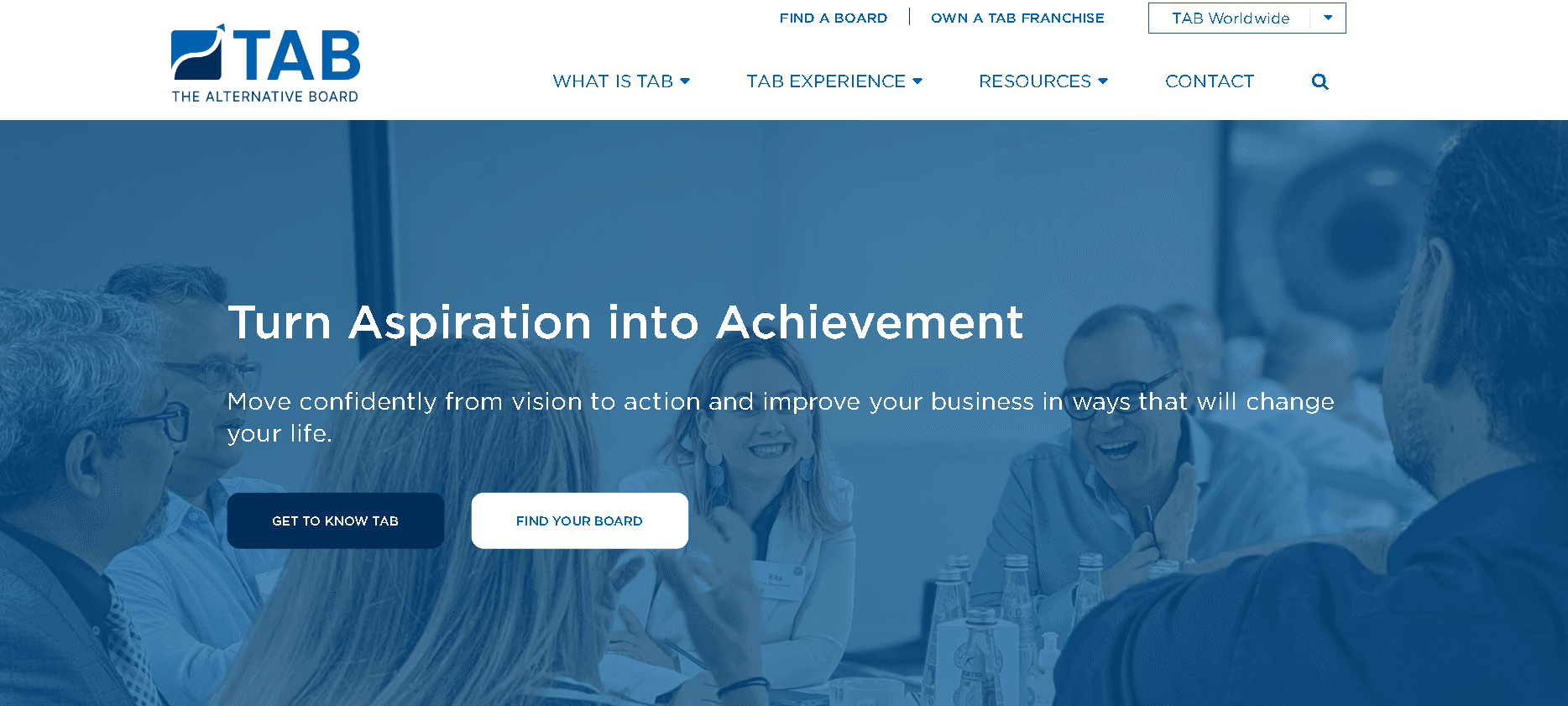
When business owners look past massive international registries, they often evaluate franchise-driven advisory models. The Alternative Board (TAB) blends local peer boards with regular, individual coaching sessions hosted by certified local facilitators.
Operating historically as a widespread advisory network, the framework serves tens of thousands of regional enterprise owners globally.
Pricing: Rates depend entirely on local franchise territories, meaning membership dues and assessment costs are set locally by regional operators rather than published in a central registry.
Best For: Small business operators who want a localized advisory board paired with ongoing one-on-one coaching, rather than joining a massive corporate network.
6. Renaissance Executive Forums (REF)

Active since 2001, Renaissance Executive Forums (REF) establishes peer advisory boards built entirely for C-suite executives, company owners, and presidents. Groups are constructed around non-competing industry lines to protect business privacy.
The format runs on confidential advisory sessions tailored for senior leaders rather than startup founders.
Pricing: Rates are set at the local level and lack a central public directory. Exact membership costs are tailored and disclosed privately during the interview and placement process based on executive tier, company revenue size, and region.
Best For: Senior executives who want a structured advisory board format featuring cross-industry peers operating in non-competing sectors.
7. Genius Network

Finally, there’s Genius Network. Joe Polish runs this high-ticket gathering designed around marketing optimization and deal-making. Members assemble twice a year for live events featuring hot-seat problem-solving blocks alongside access to an online community.
Focus centers heavily on scaling advertising pipelines, landing direct introductions, and driving rapid business growth rather than maintaining quiet, operational peer accountability.
Pricing: Standard enrollment sits around $25,000 USD annually (typically structured as a multi-year commitment), accompanied by upper-tier mastermind programs like GeniusX scaling up to $100,000 USD per year.
Best For: Agency operators, info-product creators, and marketing-obsessed founders who prioritize live stage networking and high-level deal flow over a confidential operational peer forum.
How to Choose the Right Mastermind Group
Sifting through promotional noise takes patience, especially when every option claims to transform your organization. But narrowing down the field comes down to evaluating a few core operating metrics before committing capital or time.
Here are the key factors worth examining before you decide.
Facilitation
Check if a trained chair or professional moderator guides every session, or if the meeting runs completely self-managed. Consistent facilitation serves as the single biggest predictor of whether a group stays on track or drifts into unproductive venting.
Vetting and Composition
You want to examine how participants get selected for the room. Look closely at whether members undergo thorough screening (similar to what you would expect when evaluating best communities for biotech executive leaders) for business stage, operational fit, and non-competing backgrounds, or if registration remains open to anyone with a credit card.
Confidentiality and Structure
Investigate the underlying framework protecting sensitive discussions. A reliable setup requires strict protocols and a defined meeting methodology, ensuring discussions rely on established rules rather than whoever happens to log into the call that month.
Cost and Commitment
Financial requirements span from free peer meetups to corporate programs costing upwards of six figures annually. So match the investment directly to the level of structure, accountability, and operational depth your leadership schedule requires.
How to Find a Mastermind Group Near You
Searching for “mastermind near me” or “mastermind groups near me” typically leads to a specific realization.
This realization is that major organizations like YPO, EO, Vistage, TAB, and REF don’t operate as isolated, local meetups, but they function through regional chapters. And securing a spot means tracking down the local branch rather than hunting for a standalone circle.
Geography also dictates format. High-structure organizations rely heavily on physical, local rooms for monthly gatherings. Meanwhile, newer or independent options often run entirely over virtual video calls.
For leaders prioritizing a facilitated peer experience, browsing the Forum Finder directory at ForumSpace offers access to around 80 real forums. It provides a transparent way to check options by fit instead of sorting through search results blind.
Mastermind Groups for Entrepreneurs vs. Established Leaders

An early-stage startup requires a different kind of room than a mature enterprise with complex departmental layers, just as specialized sectors look toward best communities for finance leaders. Navigating this transition means recognizing how scale, revenue thresholds, and organizational structure dictate the right peer advisory network.
Startup Phases and Informal Peer Circles
Founders building from scratch often lean toward casual peer circles or lower-cost mastermind groups for entrepreneurs built specifically for entrepreneurs. That initial phase centers on rapid experimentation, hustle, and bootstrapping survival.
Revenue Thresholds and Organizational Weight
Organizations shift entirely once revenue climbs and organizational weight sets in. And strict entry barriers enforce this separation. For example, EO requires crossing the million-dollar revenue threshold, while YPO enforces age and leadership caps. Those hurdles intentionally route newer operators toward alternative options until their companies scale up.
Moving Beyond the DIY Stage
Stepping past the DIY mastermind phase points directly toward professional facilitation. A structured Forum model built by ForumSpace fits leaders who have outgrown a traditional business mastermind group and require rigorous peer vetting, trained moderation, and strict confidentiality. It’s designed for operators running complex structures rather than brand-new founders testing a concept.
Pros and Cons of Joining a Mastermind Group

Entering a shared leadership circle brings distinct advantages alongside clear operational risks. And sizing up both sides prevents costly mismatches.
Pros
Real Accountability: Peers who carry executive responsibilities provide grounded pressure and support, discarding surface-level professional networking entirely.
Faster Pattern Matching: Listening to how seasoned directors solved comparable operational crises cuts down months of trial and error.
Confidential Space: A secure environment allows leaders to think out loud about heavy choices that can’t be shared with staff, investors, or family.
Cons
Variable Quality: Standards shift drastically between an informal, self-run gathering and a professionally moderated setup, even though both carry identical labels.
Pricing Discrepancies: Costs scale from free meetups to six-figure annual commitments where price tags rarely guarantee structural fitness.
Time Demands: Attendance requires a consistent, recurring time investment, meaning a poorly matched roster or mismatched industry mix drains productive hours.
Who Should Use ForumSpace
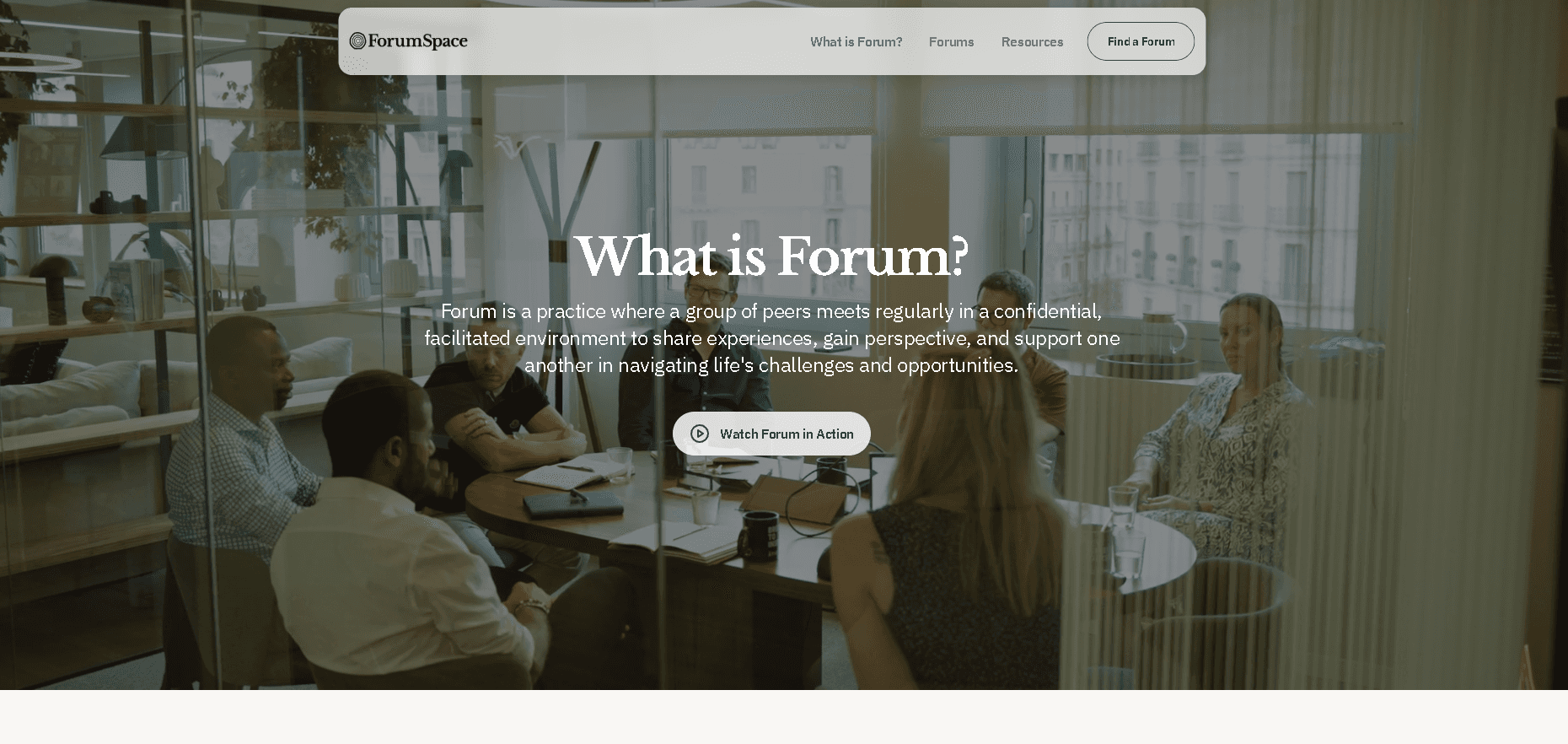
Stepping away from generic networking circles, usually brings clarity regarding who benefits most from structured peer environments. Certain roles fit this model naturally.
Sponsors
Founders, chief executives, and senior leaders step into this category as primary decision-makers. Rather than spending hours sourcing and managing an informal mastermind group, sponsors use this pathway to place themselves or key members of their executive team directly into a professionally managed environment.
Forum Mates
These are the operational leaders who sit inside the room during every session. They seek structured, confidential peer exchange supported by vetted participant composition, which allows them to tackle real management hurdles without second-guessing the safety of the room.
Chairs and Organizers
Peer group leaders, moderators, and professional organizations also look to these frameworks. Instead of building operational methodology, custom technology, and training protocols from scratch, they utilize established systems to scale their leadership communities effectively.
Limitations
Now, every model comes with distinct boundaries. A structured Forum framework serves specific operational needs, but it leaves out other approaches.
So here are the key factors to keep in mind:
Informal Setups: Leaders hunting for a free, ultra-low-cost, or casual peer circle might find that this setup isn’t built for them. That informal DIY route remains a totally legitimate choice for a different style of operator.
Pricing Transparency: Exact financial details stay private rather than posted on an open webpage, requiring a direct conversation to confirm numbers.
Cohort Availability: Fitting into a vetted group depends entirely on schedule availability and current cohort composition. Instant self-service checkout doesn’t exist here because curating the right peer balance takes deliberate timing.
FAQ

What Is a Mastermind Group?
A traditional mastermind group brings together a small, recurring circle of peers to share operational hurdles and hold each other mutually accountable. These independent circles often run informally, spanning everything from zero-cost local meetups to paid private programs.
What is the Difference Between a Mastermind Group and a ForumSpace Forum?
An informal peer circle relies on self-run coordination without standardized guidelines. Meanwhile, a ForumSpace Forum operates as a professionally facilitated leadership experience driven by a trained moderator, a strict confidentiality methodology, and carefully vetted peer composition.
How Do I Find a Mastermind Group Near Me?
Locating a traditional mastermind group near you usually requires searching for local chapters of major organizations like YPO, EO, Vistage, TAB, or REF rather than independent open groups. Leaders searching for a structured Forum can browse the Forum Finder directory to evaluate curated options by direct fit.
Are Mastermind Groups Worth the Cost for a Business Owner?
Value depends entirely on the level of professional structure and facilitation built into the program. Fees stretch from free informal gatherings to six-figure annual commitments, meaning price tags don’t always reflect actual structural quality or stage alignment.
Are Mastermind Groups Legitimate, or Is It Just Networking?
Established peer organizations like YPO, EO, Vistage, and TIGER 21 maintain decades of operational track records, strict eligibility rules, and structured meeting formats. Independent circles vary wildly in quality, making thorough vetting of facilitation and participant composition essential before committing time.
What is the Best Mastermind Group for Entrepreneurs Versus Established Leaders?
Early-stage founders tracking baseline growth usually find value in affordable, informal mastermind groups for entrepreneurs or startup-specific networks. Mature organizations running complex departments require rigorous formats like a structured Forum or a chair-guided executive advisory board.
Final Verdict
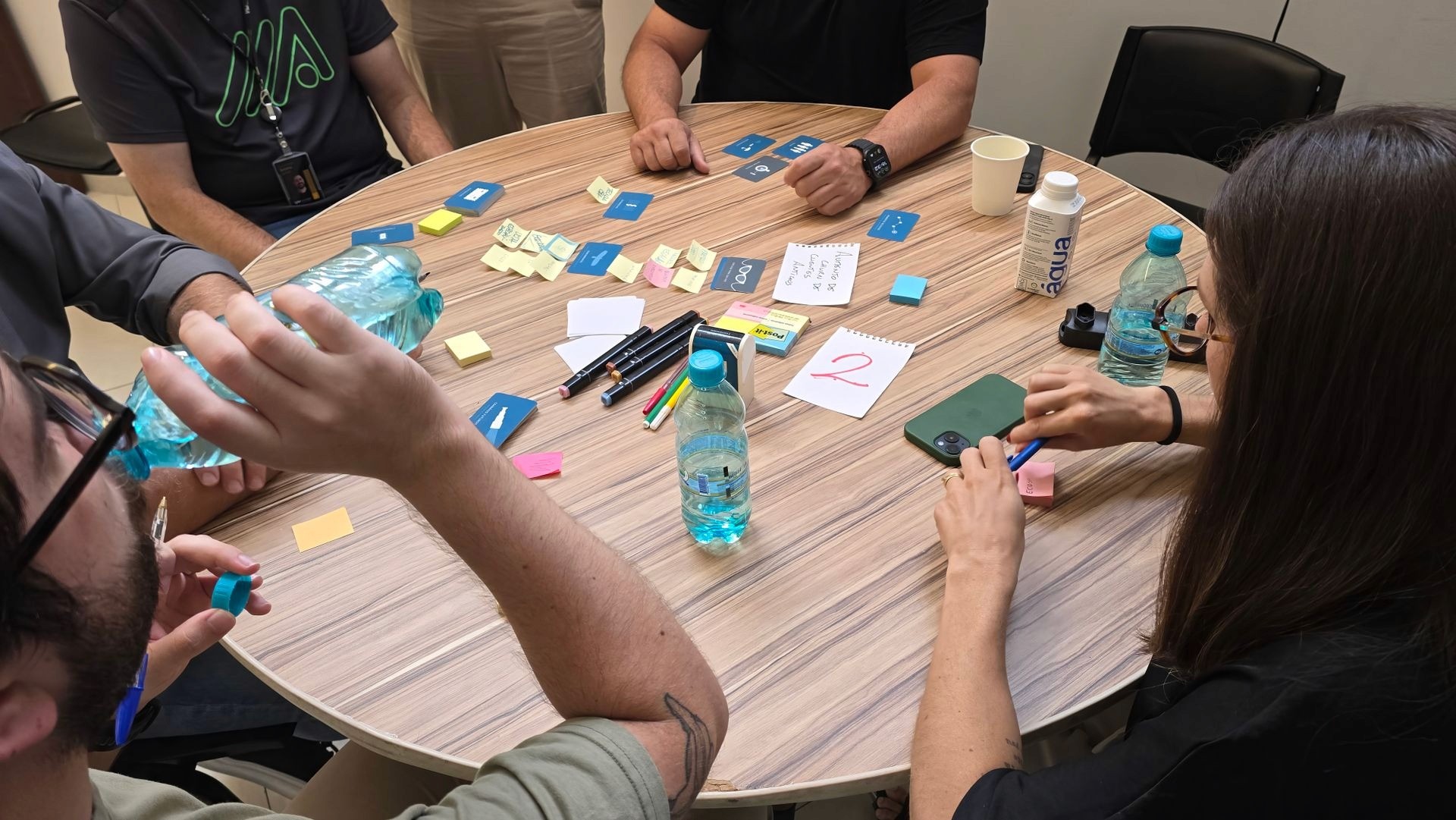
Choosing a peer environment comes down to operational weight, and the core decision centers on whether you need a casual mastermind group or a heavily moderated enterprise format. With that in mind, selecting any single brand name matters less than matching the right format to daily leadership demands.
For leaders who’ve outgrown casual networking and want reliable depth, ForumSpace delivers a fully enabled Forum experience featuring trained moderation, strict confidentiality protocols, and carefully curated peer rosters.
Other options, on the other hand, serve distinct operational brackets.
YPO and EO fit executives who qualify by revenue and want an international network wrapped around internal forums. Vistage matches established CEOs needing chair-guided groups paired with private coaching.
There’s TIGER 21 that serves high-net-worth investors prioritizing portfolio preservation over daily company management. Finally, TAB and Renaissance Executive Forums provide regional advisory boards, while Genius Network handles marketing-heavy event networking.
Informal options definitely remain entirely valid for early-stage operators. However, when leadership requires real consistency, professional facilitation makes the difference.
Ready to experience a higher standard of leadership peer groups? Visit ForumSpace to explore the directory and connect with a community designed for experienced leaders.

Find a Forum