The Best Forums for Entrepreneurs and CEOs in 2026

The strongest peer forums for entrepreneurs and CEOs share four core elements: small groups, strict confidentiality, trained facilitation, and peers who carry comparable decision weight. Everything else, such as meeting cadence, location, or cost, is secondary to those core traits. This guide outlines what to evaluate in a group and walks through how ForumSpace operates from initial matching to the first meeting. ForumSpace publishes this guide to help leaders judge if the methodology fits their needs.
What a Forum Is
A Forum is a small group of six to eight leaders who meet regularly, in confidence, with a trained facilitator, to work through the professional and personal challenges they are actually facing. It is not an online message board or a conference panel. A Forum is a standing group of peers showing up on a fixed schedule across months and years.
Executive isolation remains a distinct reality for founders, corporate directors, and managing leaders. When an individual reaches the top level of an organization, normal conversational feedback loops dissolve. Employees seek direction, board members evaluate risk, and clients expect certainty. Leaders rarely have a space to process unresolved operational choices, personal doubts, or strategic crossroads without external consequences.
A Forum creates an intentional, confidential space specifically to solve that structural isolation. It relies on sustained peer dynamics rather than transactional advice. Leaders inside a Forum build trust over time, allowing members to share unvarnished realities, test raw ideas, and receive objective perspective from people who carry equal weight.
What Separates a Strong Forum from a Weak One
Not every peer group delivers on its promises. Specific criteria separate functional groups from those that quietly fail over time:
Member Calibre and Decision Weight: Participants must carry decisions of equal weight. Placing a venture-backed founder alongside a middle-market division leader creates operational friction. Matching by decision burden keeps discussions relevant for everyone.
Strict Confidentiality: Confidentiality must operate as an active norm rather than a printed policy. Nothing shared in the room ever leaves the room.
Group Size: Six to eight leaders keep the group small enough for everyone to speak deeply while maintaining perspective diversity.
Trained Facilitation: A dedicated facilitator manages the process so no single voice dominates and structural boundaries hold firm.
Consistent Structure: Fixed meeting formats ensure mastermind groups for leaders outlast unscripted gatherings, which inevitably lose momentum.
Holistic Scope: Meetings cover both personal and professional challenges equally, recognizing that executive performance is directly tied to personal well-being.
A Walkthrough: How a ForumSpace Forum Works
Operating inside a ForumSpace Forum involves a specific structure and process. Here is how the experience runs from member selection to ongoing meetings.
Who Is in the Room
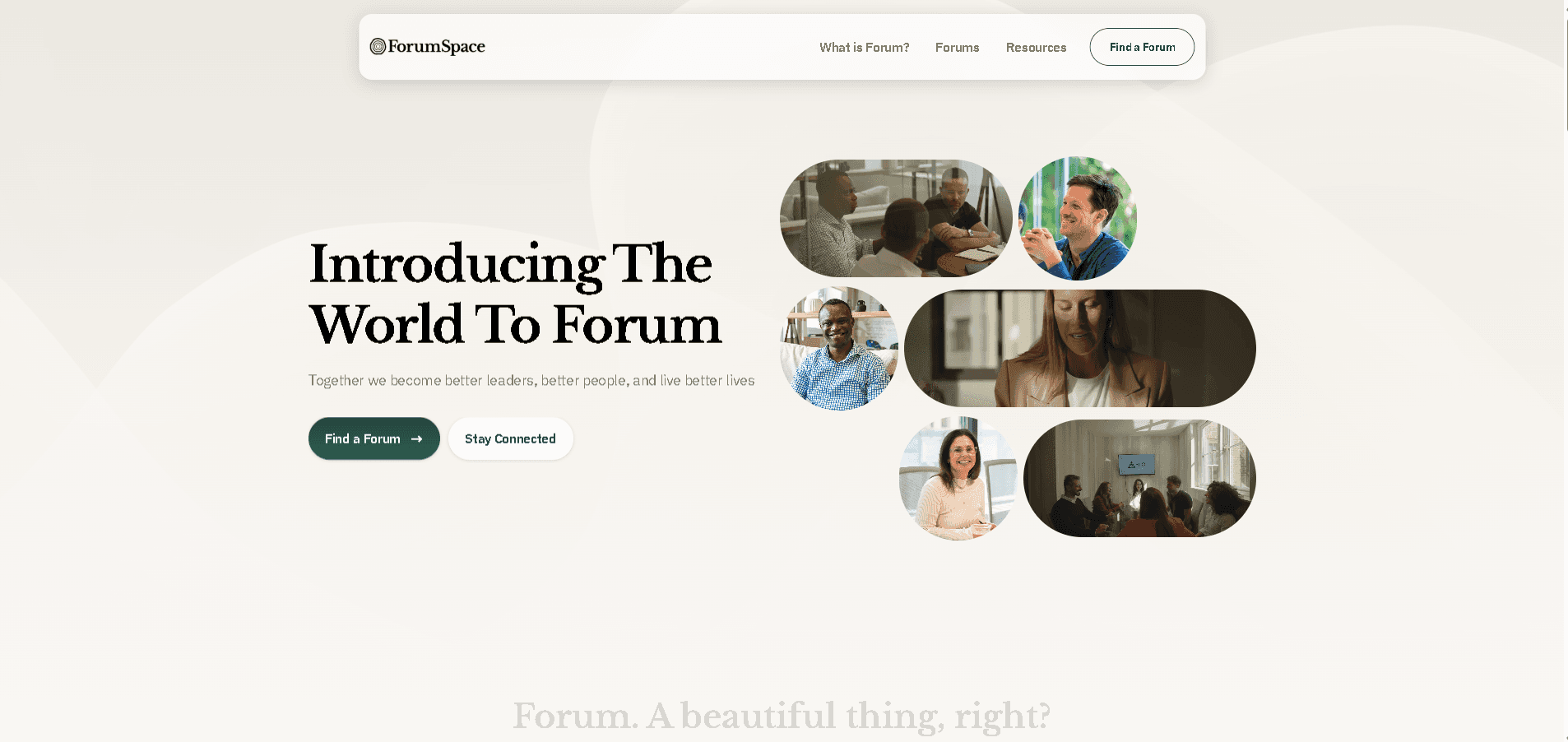
Groups consist of six to eight senior leaders matched by decision weight instead of industry. A construction firm owner and a healthcare COO often sit in the same group because they share similar operational burdens despite working in different sectors.
Cross-industry placement prevents competitive friction. Industry peers often enter conversations with existing biases, predefined assumptions, or commercial interests. External peers listen objectively and identify underlying structural patterns faster. For instance, an executive managing supply chain disruptions shares similar operational stress with a healthcare leader navigating regulatory staffing limits. Neither competes for the same customer base, which removes posturing and allows leaders to focus purely on core choices.
The Two Ways to Get in
Leaders access a Forum through two distinct entry points:
Nomination: A company sponsor nominates a leader to build executive bench strength and support senior executives facing expanded duties. The sponsoring organization covers the financial cost.
Direct Application: An individual leader approaches ForumSpace directly via Find a Forum to secure outside peer support.
Both routes lead to identical matching standards to protect group harmony.
How You Are Matched
Matching focuses entirely on member fit. Specific placement criteria are confirmed during the initial intake conversation to ensure every participant joins a group with equivalent operational responsibility.
Intake leads evaluate company size, organizational complexity, decision scale, and current business pressures. The process also screens for potential conflicts of interest. Direct competitors, vendor-client relationships, and personal acquaintances are placed in separate groups to preserve complete safety.
Onboarding Before Your First Meeting
New members complete onboarding prior to their initial session. This onboarding education outlines expectations, meeting norms, and methodology rules so every Forum Mate enters the room fully prepared and confident.
The onboarding sequence teaches members how to frame complex issues concisely using experience sharing. This means learning from lived experiences rather than giving direct, prescriptive advice. Understanding these norms beforehand prevents friction during the first live meeting.
Your First Meeting, Start to Finish
Sessions open with a short settling exercise, such as guided breathing or a quiet pause. Busy executives need a clear transition out of daily tasks. Pausing at the start ensures members are fully present rather than half in their email inbox.
Next comes the opener round, where every participant states their current mental state without a corporate filter, rating their overall well-being and context. This moves directly into a clearing round, where members name immediate personal or operational distractions to set them aside before deeper issues surface.
Finally, members share progress updates since the last session. These updates highlight the core challenges that form the main agenda, leading into structured deep dives on priority topics using experience sharing and targeted questioning.
Why the Sequence Never Changes
Forum meetings follow a strict, repeatable sequence every time. Predictable structure removes anxiety about the process. When members know what comes next, they share candid details faster. Unstructured meetings often descend into casual banter or dominance by noisy personalities. A repeatable agenda keeps the conversation disciplined and focused on real challenges.
What the Facilitator Does
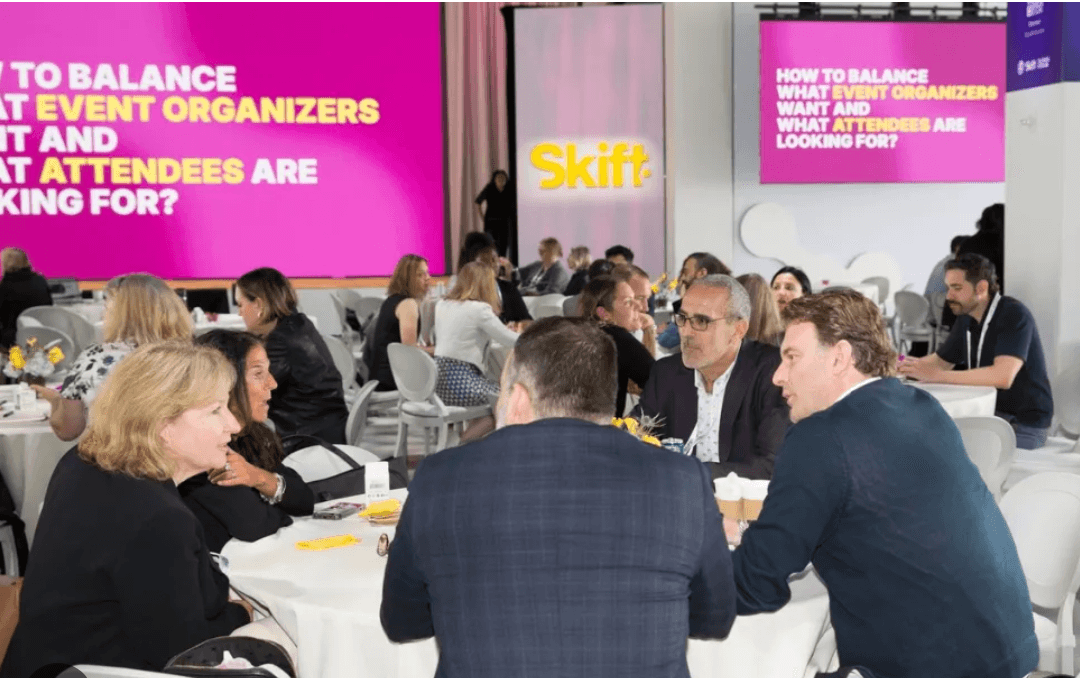
Facilitators guide the meeting structure and protect group safety. They prevent individual members from monopolizing time and step in if someone offers unsolicited advice instead of sharing lived experience. Facilitators are trained process leaders who focus on holding structural boundaries rather than offering business consulting or executive coaching.
What Is Expected of You
Absolute Confidentiality: Nothing shared in the room leaves the room. Trust breaks permanently if details leak.
Consistent Attendance: Forums meet monthly, complemented by an annual in-person retreat. Missing meetings breaks group momentum, requiring a firm commitment to show up.
Unfiltered Honesty: Members must bring real operational problems rather than sanitized summaries.
Whole-Person Scope: Members address both personal and professional challenges, recognizing that work choices directly impact home life and personal stress affects business output.
What ForumSpace Provides Around the Forum
ForumSpace enables and delivers the Forum experience through several coordinated operational layers. Trained facilitators hold group boundaries, while a proven methodology maintains a predictable sequence for productive sessions. New participants receive onboarding education to prepare them for group dynamics.
Custom-built technology operates entirely in the background to handle meeting scheduling, securely share agenda notes, and track attendance without interrupting human conversation. Additionally, ForumSpace curates business insights, practical tools, and ongoing guidance to support members throughout their journey.
What It Costs
ForumSpace does not publish standard rates online. Pricing details are available upon request through Find a Forum. To learn more, kindly fill out this form to access pricing information directly. Sponsoring companies frequently cover costs for nominated executives.
Corporate sponsorship aligns with leadership development budgets. Organizations invest in peer groups to retain top talent, shorten decision cycles, and build resilient leadership teams. Direct applicants handle membership through corporate expense accounts or personal professional development allocations.
How a Forum Differs from Other Formats
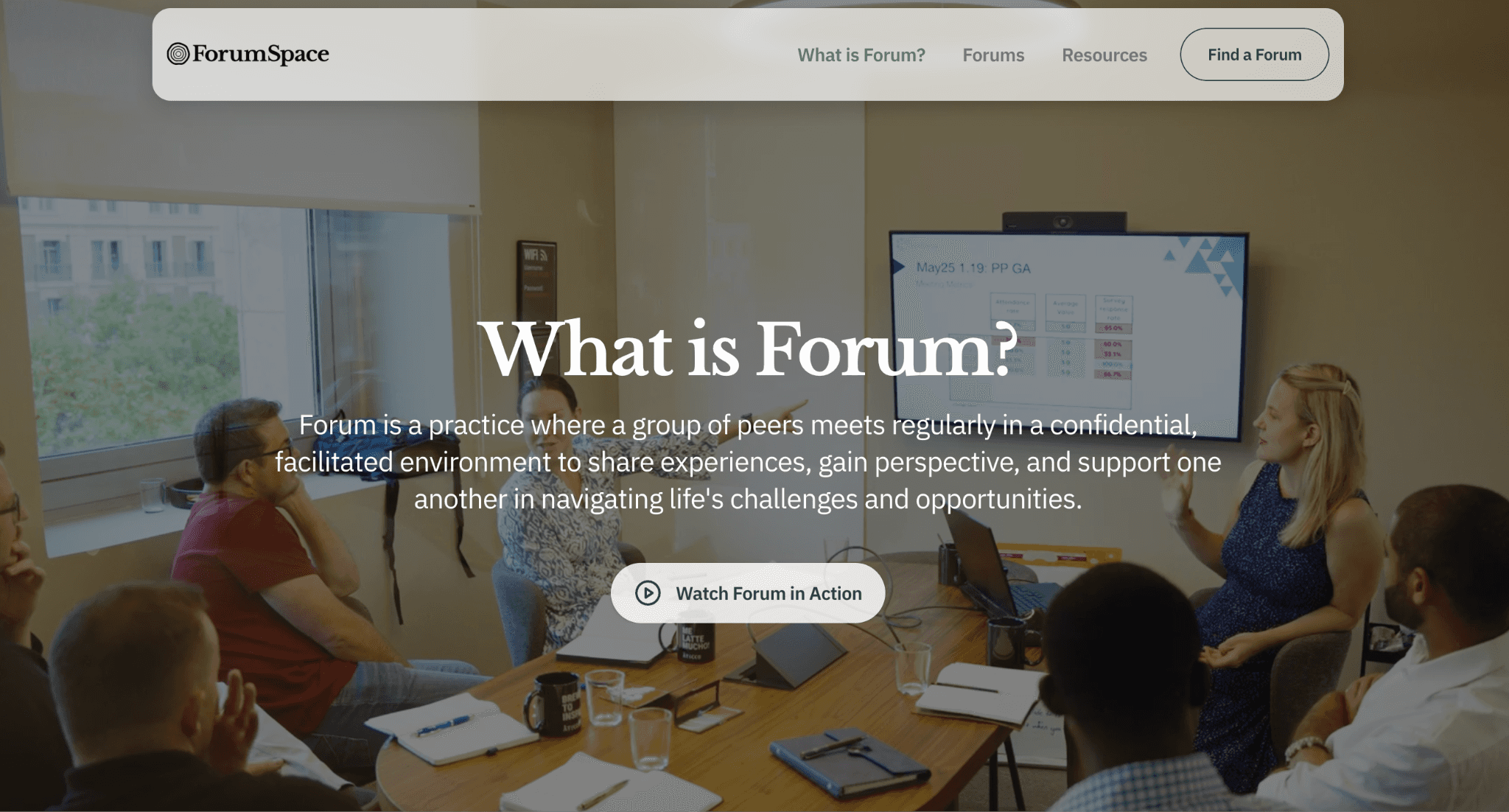
Understanding how a Forum differs from alternative executive formats ensures leaders select the right dynamic.
A mastermind group generally focuses on tactical business strategy and quick peer feedback, often using flexible formats and variable group sizes without addressing personal well-being. Executive coaching relies on a one-on-one expert relationship focused on individual skill execution, whereas a Forum contains no single expert because the value originates from shared peer experiences. Industry associations provide broad networking and large-scale event access, but rarely offer small, standing CEO peer groups that build trust across years.
Sidebar offers a closer comparison focused on professional goal execution, but Forum addresses the whole person by treating personal well-being and professional growth as equally essential.
Who ForumSpace Suits, and Who It Does Not
ForumSpace suits senior leaders and nominated executives who want structured, confidential peer support and are willing to share real operational struggles.
It does not suit leaders seeking sector-specific tactical tips or vendor lists, as groups feature mixed industries by design. It is not for individuals seeking lead generation, sales pipelines, or direct instruction from a consultant. Leaders unwilling to commit to consistent attendance or open up about personal challenges will not gain value from this format.
Other Forums Worth Knowing About
Several reputable organizations offer peer groups for executives, each serving distinct needs:
Vistage: Runs peer advisory groups combining group sessions with individual expert coaching.
EO (Entrepreneurs' Organization): Manages an international founder community featuring its own internal Forum programme.
Chief: Provides peer groups and executive clubhouses tailored specifically for women leaders.
Sidebar: Focuses on small peer advisory groups targeted at professional development and career growth.
Leaders can research options directly through the Forum Finder directory to evaluate formats against their personal schedule and goals.
How to Get Started
Nominated executives usually begin through company talent programs, while independent leaders apply directly. To begin the matching process, leaders can visit Find a Forum. Once a request is submitted, the matching team conducts an intake call to assess decision scale, company background, and individual fit before delivering onboarding materials for session one.
Frequently Asked Questions
What is the best forum for entrepreneurs?
There is no single best forum for every entrepreneur. The right choice depends on group size, facilitation quality, and how closely peers match your decision weight. Leaders should evaluate multiple options directly using resource tools like Forum Finder.
How many people are in a Forum?
A Forum contains six to eight leaders. This precise group size is small enough for everyone to speak deeply, yet large enough to bring diverse operational perspectives into the room.
How often do Forums meet?
Most Forums meet monthly on a consistent schedule, typically conducted virtually and complemented by an annual in-person retreat. Maintaining a fixed cadence builds continuous momentum and long-term trust.
What happens in a Forum meeting?
Meetings follow a repeatable sequence starting with a brief settling exercise like guided breathing. Participants complete an opener round to state their mental state, a clearing round to clear distractions, and a structured deep dive into specific operational challenges using experience sharing.
How do I join a Forum?
You can join through company nomination or direct application. Sponsoring organizations nominate leaders for executive development, while independent executives can request placement via Find a Forum.
How much does a Forum cost?
Pricing details are not published publicly and are supplied upon request. Costs vary depending on individual or enterprise sponsorship routes, and employers frequently cover full membership fees.
Are Forums confidential?
Yes, strict confidentiality is a non-negotiable core requirement. Nothing shared inside a meeting leaves the room, allowing executives to share vulnerable business and personal concerns safely.
Do I have to talk about personal things?
Personal challenges are included alongside professional topics because leadership decisions affect both areas equally. While you control what you disclose, the methodology is designed to support the whole leader rather than just their business metrics.
What is the difference between a Forum and a mastermind group?
Mastermind groups focus primarily on tactical business advice and informal feedback. A Forum follows a fixed sequence every session, relies on trained facilitation, and treats personal and professional challenges with equal weight.
Can my company pay for my place?
Yes, corporate sponsorship is one of the primary ways leaders enter a Forum. Organizations regularly fund memberships to retain senior talent, accelerate decision-making skills, and reduce executive isolation.
Conclusion
Effective forums rely on small groups, absolute confidentiality, trained facilitation, and equal peer weight. Evaluating these core traits helps leaders select a peer environment that drives real growth. To see how this structured methodology works in practice, explore Find a Forum.

Find a Forum